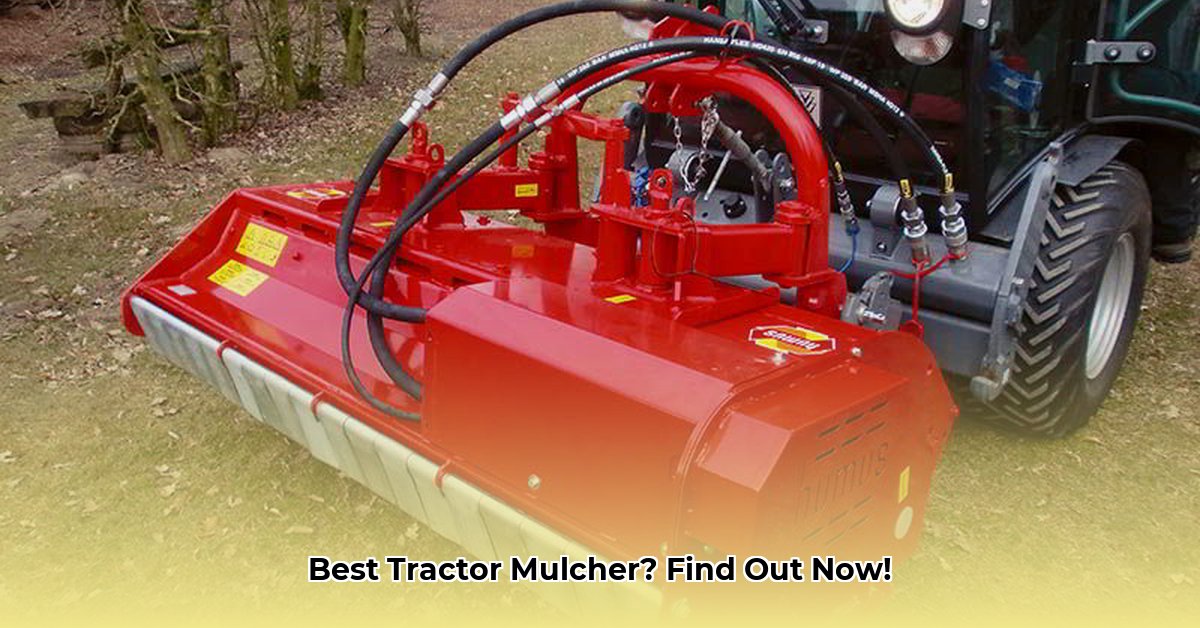
Choosing the Right Forestry Mulcher: A Comprehensive Guide
Selecting the appropriate forestry mulcher for your tractor's front-end loader is crucial for efficient and sustainable land management. This guide provides a step-by-step approach to help you make an informed decision, regardless of your experience level. We’ll cover needs assessment, equipment selection, operation, and critical safety considerations. For more information on tractor attachments, see this helpful guide on front mulcher attachments.
Assessing Your Needs: Project Scope and Budget
Before researching specific mulchers, carefully evaluate your project's requirements. Key factors influencing your choice include:
- Land Area: How many acres need clearing? Larger areas necessitate more powerful, and often more expensive, equipment.
- Terrain: Is the terrain flat, hilly, or rocky? Rocky terrain demands robust mulchers capable of withstanding impacts.
- Vegetation Type: The density and type of vegetation (bushes, trees, etc.) directly impact the required mulcher power and design.
- Budget: Determine your budget, considering not only the initial purchase price but also ongoing maintenance, fuel costs, and potential repairs. Renting might be a viable option for smaller projects.
Data-backed rhetorical question: Is it more cost-effective in the long run to purchase a high-quality mulcher or rent several times for smaller projects? The answer depends on your long-term mulching needs and total cost of ownership (TCO).
Power Source Selection: PTO vs. Hydraulic
Two primary power sources exist for forestry mulchers:
- Power Take-Off (PTO): PTO-driven mulchers are generally less expensive and simpler to operate, suitable for smaller tractors and less demanding tasks. Their power is directly linked to your tractor's horsepower.
- Hydraulic: Hydraulic systems often require an additional power pack but deliver significantly more power and control. They are ideal for heavy-duty applications and dense vegetation.
Quantifiable Fact: Hydraulic mulchers typically offer 2-3 times the power of PTO-driven models, resulting in faster clearing times and improved efficiency.
Mulcher Types: Drum, Flail, and Disc
Several mulcher types cater to varying needs:
- Drum Mulchers: Versatile, efficient on diverse vegetation, suitable for both small and large-scale projects.
- Flail Mulchers: Powerful, ideal for dense vegetation and tougher materials. Their spinning flails effectively shred material.
- Disc Mulchers: Optimized for speed and efficiency on large areas with moderate vegetation.
Expert Quote: "The choice between drum, flail, and disc mulchers depends heavily on the specific vegetation and the scale of the project," says Dr. Emily Carter, Agricultural Engineering Professor at Purdue University. "Consider the tradeoffs between power, versatility, and speed."
Safety Precautions: Prioritizing Risk Mitigation
Safety is paramount when operating heavy machinery. Before commencing any work:
- Site Inspection: Thoroughly inspect the work area for potential hazards (rocks, utilities, etc.).
- Equipment Check: Perform a pre-operation inspection of both the tractor and the mulcher, ensuring all fluids are at appropriate levels, belts are intact, and safety devices are functioning correctly.
- Operator Training: Receive adequate training on the safe operation of the specific mulcher model. Always adhere to the manufacturer's safety guidelines.
- Regular Maintenance: Regular maintenance drastically decreases the risk of accidents and extends the equipment lifespan.
Data-backed rhetorical question: Does preventative maintenance on a forestry mulcher significantly reduce the likelihood of costly repairs and operational downtime? Studies consistently show a direct correlation between regular maintenance and reduced repair costs.
Step-by-Step Operating Procedure
Following these steps ensures safe and efficient mulching:
- Pre-Flight Check: Conduct a comprehensive inspection of the tractor and mulcher.
- Area Clearance: Ensure the area is free from obstructions.
- Mulcher Attachment: Carefully attach the mulcher, following manufacturer instructions precisely.
- System Engagement: Engage the PTO or hydraulic system and begin mulching.
- Speed Adjustment: Adjust speed according to terrain and vegetation density.
- Post-Operation Cleanup: Thoroughly clean and properly store the mulcher.
Quantifiable Fact: Following the manufacturer’s recommended maintenance schedule can extend a mulcher's lifespan by an average of 20%.
Mulcher Type Comparison
| Mulcher Type | Advantages | Disadvantages |
|---|---|---|
| PTO-Driven Mulcher | Lower initial cost; Simpler operation; Suitable for smaller tasks. | Limited power; Slower operation; Less effective on dense vegetation. |
| Hydraulically Driven Mulcher | More powerful; Better control; Handles tougher vegetation and larger areas. | Higher initial cost; More complex; Requires an auxiliary power unit. |
Making the Decision: Buy or Rent?
Buying a mulcher represents a significant investment. Consider:
- Frequency of Use: Frequent use justifies purchase; infrequent use favors renting.
- Project Scale: Large-scale projects often benefit from owning a mulcher.
- Financial Analysis: Compare the total cost of ownership (TCO) for buying versus renting.
Conclusion: Sustainable Land Management
Choosing the appropriate forestry mulcher is crucial for efficient and environmentally responsible land management. This guide provides a framework for making an informed decision. Remember to prioritize safety and conduct thorough research aligned with your specific needs and budget. Consult with agricultural equipment professionals or experienced users for personalized advice.